Birthstones are one of the few jewellery traditions that almost everyone knows and almost nobody follows strictly. A garnet pendant inherited from a grandparent. Pearl studs bought for a June birthday. A ring chosen simply because the stone matched the month. The idea is that each month has its own stone — sometimes several — and that wearing yours brings a little luck, protection or good health. The lists have shifted over the years, and the rules are far looser than most people assume. Here is a plain guide to the stones, the alternatives that are generally accepted, and how to buy well in the UK.
Where the birthstone lists come from
There is no single ancient chart handed down intact. The modern list most UK jewellers work from grew out of older traditions — some biblical, some medieval, some Victorian — and was tidied up by the jewellery trade during the twentieth century. That is why some months have one stone and others have three or four. March can be aquamarine or bloodstone. June can be pearl, moonstone or alexandrite. December is positively crowded.
The useful part is what this means for you: there is room to choose. If your designated stone is not to your taste, or sits outside your budget, an accepted alternative is almost always fine. Nobody is checking.
The month-by-month list
These are the stones you will see most often in British shops, with a note on each.
- January — garnet. Deep red, hard-wearing and usually affordable.
- February — amethyst. Purple quartz, widely available from pale lilac to deep violet. The stone is plentiful, so you should not have to pay a premium.
- March — aquamarine or bloodstone. Aquamarine is the clean, pale blue favourite; bloodstone is a dark green jasper flecked with red.
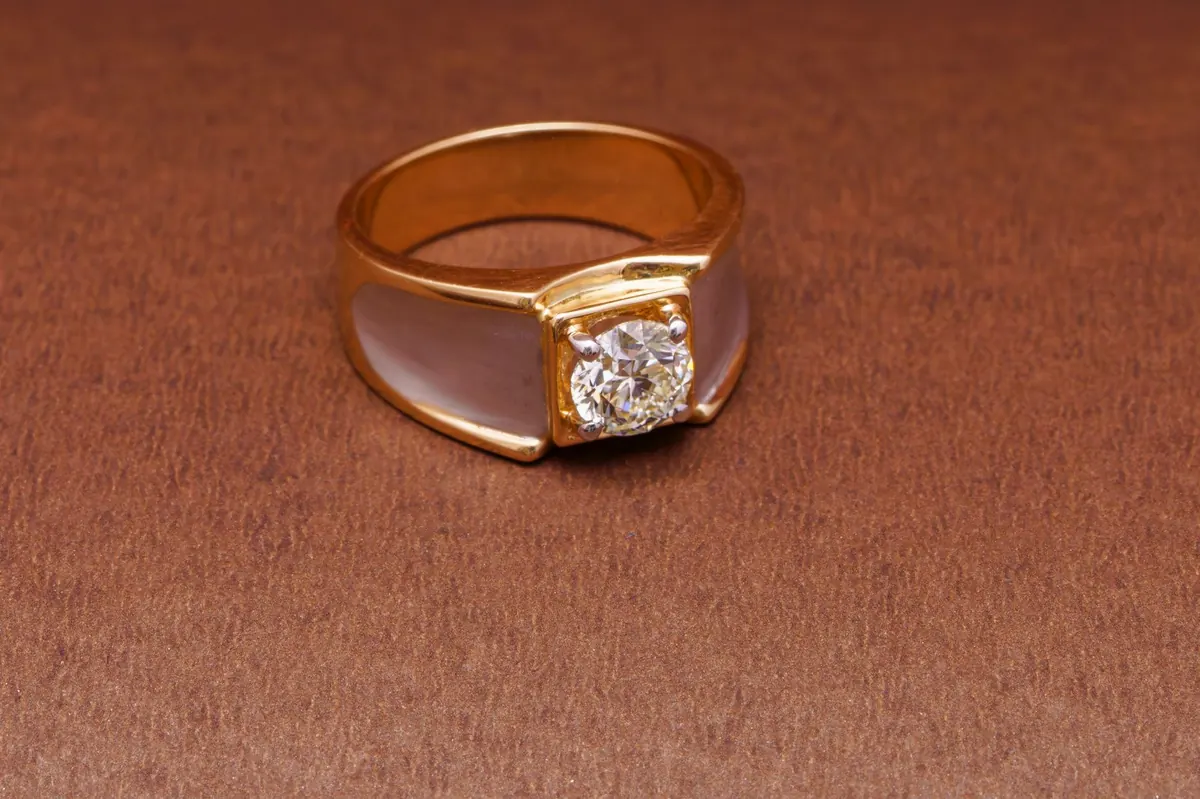
- April — diamond. The best known and much the most expensive. Alternatives are below.
- May — emerald. Green beryl, almost always containing natural inclusions, which the trade calls jardin. More brittle than its hardness suggests, so better in a pendant than in a ring worn hard.
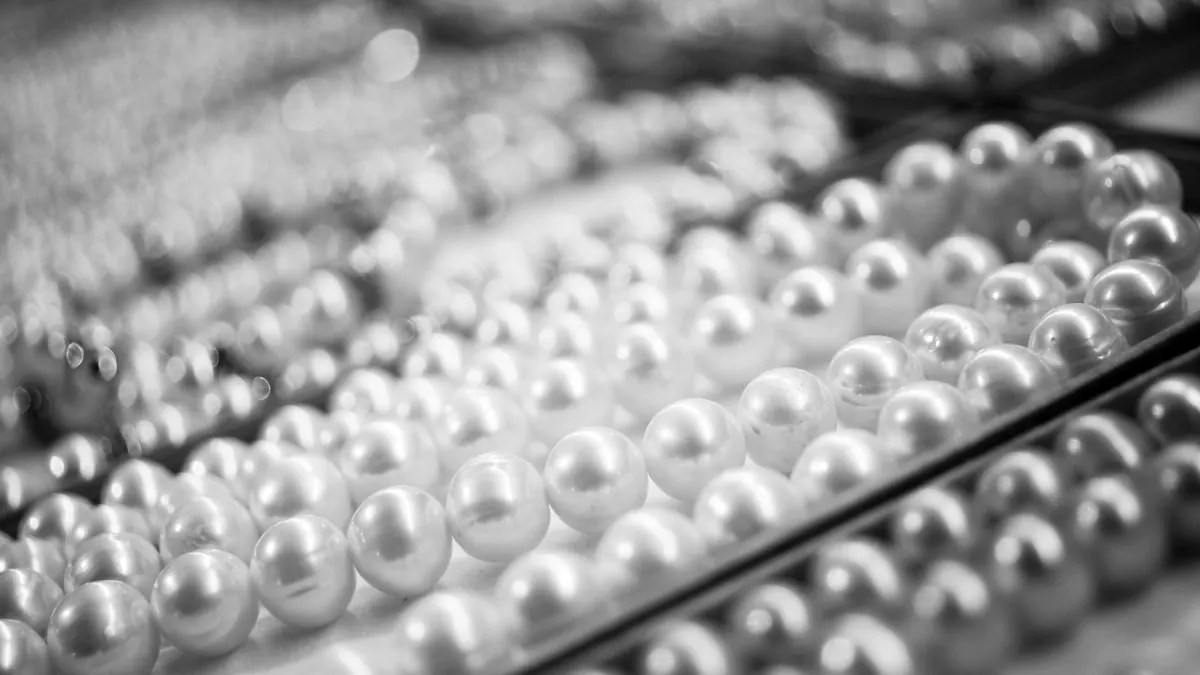
- June — pearl, moonstone or alexandrite. Pearls scratch easily, moonstone gives a soft milky shimmer, and alexandrite is rare and priced accordingly.
- July — ruby. Red corundum, hard and suited to daily wear. Smaller stones are within most budgets; large fine ones are not.
- August — peridot or spinel. Peridot is a bright yellow-green that looks best in daylight. Spinel comes in many colours, takes a fine polish and is quietly good value.
- September — sapphire. Usually blue, though pink, yellow, green and white sapphires are equally legitimate.
- October — opal or tourmaline. Opal for play of colour, tourmaline for toughness in almost any hue.
- November — topaz or citrine. Golden and warm. Blue topaz is widely sold, though the colour is normally the result of treatment.
- December — turquoise, tanzanite or zircon. Turquoise is opaque and comparatively soft, tanzanite a deep violet-blue, zircon bright and often overlooked.
Modern alternatives worth knowing
April is where most people start looking for a swap, because diamond prices are what they are.
If you want diamond, but not the bill
- Lab-grown diamond. Chemically and optically the same as a mined stone and generally cheaper. If you are being shown one, ask directly which it is — a good retailer will say so without hesitation.
- Moissanite. A different material altogether, with more dispersion, so it throws more rainbow colour. Popular, but not a diamond in the technical sense.
- White sapphire or white topaz. Quieter and less brilliant, considerably cheaper, and perfectly attractive in small pieces.
Elsewhere the substitutions are about appearance rather than budget. A green tourmaline gives you the look of an emerald with fewer worries about chipping. Blue topaz or iolite stands in for sapphire blue. Well-chosen spinel or tourmaline can cover almost any colour you had in mind for July, August or October.
What the stones are said to mean
Meanings vary between traditions, and none of them are fixed. Garnet has long been linked with protection and safe travel. Amethyst was associated with calm and clarity. Emerald stood for hope and fidelity, ruby for passion and vitality, sapphire for wisdom and loyalty. Pearl and moonstone carry quieter associations — patience, intuition, new beginnings. Opal has a reputation for bad luck in some folklore and for creativity in others, which tells you how much weight to give the whole business.
Treat it as pleasant symbolism rather than anything with a factual basis. It is a nice thing to hang a gift on, and a poor thing to make a decision around.
Buying birthstone jewellery in the UK
A few practical points will save you money and disappointment.
- Choose the stone before the setting. Deciding you want an aquamarine pendant first makes the rest of the search simpler than falling for a setting that will not take the stone you want.
- Ask about treatments and lab-grown stones. Heat treatment, oiling and filling are routine for sapphire, ruby, emerald and blue topaz. That is normal, but it should be disclosed, and the price should reflect what you are buying.
- Match hardness to how you will wear it. Diamond and corundum sit at the top of the scale; emerald, opal, pearl and turquoise are softer or more brittle. Pearls in a ring worn every day will dull and scratch. Softer stones belong in earrings and pendants.
- Check the metal and the hallmark. Sterling silver tarnishes and is softer than gold, and plated pieces eventually wear through. In the UK, most precious metal items above a small weight threshold must carry an assay office hallmark, so its absence is worth questioning.
- Buy where returns are straightforward, and think about insurance. For anything valuable, ask for an independent valuation and confirm with your insurer that the piece is covered away from home. That is a conversation to have with them rather than assume.
If you have a known metal sensitivity, check the alloy before buying and speak to a pharmacist or GP if a reaction persists.
A sensible way to choose
Start with one piece you will actually wear rather than a full set. A birthstone works best as something small and personal — a pendant, a pair of studs, a single ring — not an heirloom you feel obliged to like. If the traditional stone leaves you cold, take an alternative and do not think twice about it. And if you are buying for someone else, a birthstone is a thoughtful gesture, but their taste in jewellery matters more than the month they were born in.
Photo: starbright / Pixabay