Trending

Vintage jewellery rewards patience. A brooch assayed in Birmingham in 1910, or a ring that has already survived a century of wear, carries something new work rarely does. Buying online, though, means trusting photographs, a written description and a seller you may never meet. The disappointments that follow almost always trace back to the same few oversights — and every one of them is avoidable with a handful of questions asked before you pay.
A hallmark is an assay office's statement about metal purity. That is all it is. It does not confirm the date, the maker, the stones or the quality of the setting, and a piece without one is not automatically fake — older and imported jewellery often carries continental marks, or none at all.
A full UK hallmark usually includes a sponsor's (maker's) mark, an assay office mark and a fineness mark. The date letter is optional these days, so a missing one tells you very little. It is worth learning the common fineness marks:
Ask for a sharp macro photograph of the marks before you buy. Worn or half-legible marks are normal on genuinely old pieces, but stamps that sit awkwardly, look freshly cut, or contradict the metal described deserve an explanation.
Almost every piece over fifty years old has been mended at some point, and a repair is not a deal-breaker. Paying antique prices for a heavily restored piece is. Look for a solder line inside a ring shank, a patch of gold that does not quite match the rest, claws that have been re-tipped so often they have become blobs, or a modern base-metal clasp on an old silver chain. Heavy polishing rounds off detail, too: if the engraving looks soft and the edges feel slippery, the piece may have been over-buffed.
Ask plainly whether the item has been resized, repaired, re-plated or restored, then request photographs of the inside of the shank, the back of the setting and the clasp. Undisclosed repairs matter twice over — they change what the piece is worth and how long it will survive in wear.
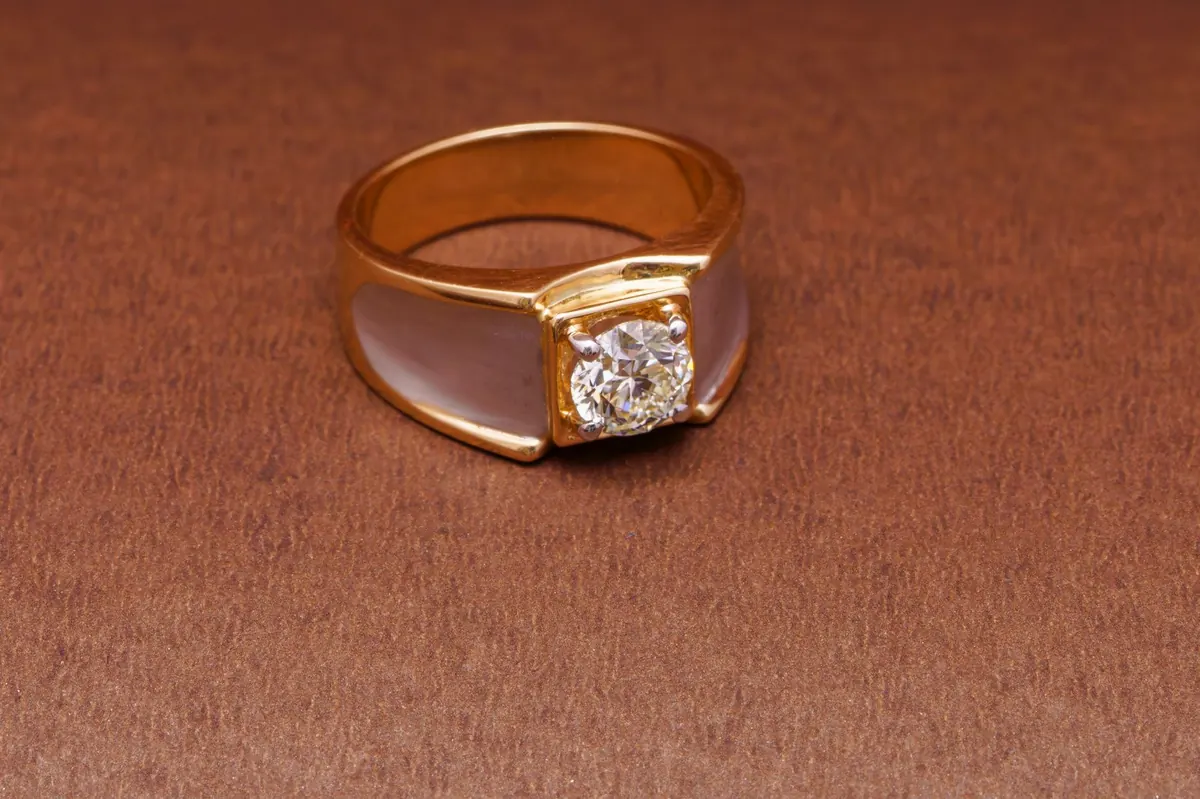
"Original stones" is one of the most elastic phrases in online listings. A ring described as Art Deco that holds a modern brilliant-cut diamond is a mismatch worth questioning, since an old European or rose cut would be expected. Look closely at multiples: eight garnets where two are a slightly different red, a row of pavé where one stone sits fractionally higher, a pearl a shade whiter than its neighbours. Stones get swapped over the decades, sometimes thoughtfully and sometimes cheaply.
Ask whether any stone has been treated, filled or replaced, and whether pearls are natural or cultured — the difference in value is significant. Treat an in-listing "tested as diamond" claim with caution, since a basic tester may not separate natural from lab-grown or from a convincing imitation. If the stones are the reason you are buying, make the purchase conditional on an independent check by a jeweller or gem laboratory, and be sure the return window is long enough to allow one. For anything of real value, it is worth taking proper advice before committing.
Return terms decide how much risk you are taking, so read them before you buy rather than after the parcel arrives. Under UK consumer law, most online purchases from a business come with a 14-day right to cancel from the day of delivery. That right does not cover everything: bespoke, personalised or made-to-measure items are often exempt, so a ring resized for you or a locket engraved with initials may be yours to keep. Buying from a private individual through a marketplace or auction site is a different arrangement again, and returns may not be offered at all.
Check who pays return postage, whether the piece must go back unworn and in its original packaging, and whether you are expected to send it insured. Keep a copy of the listing text and photographs as they appeared on the day of purchase — if the item arrives materially different from its description, that record is what you will rely on. If a dispute arises over a costly piece, Citizens Advice or a solicitor can tell you where you stand.
A photograph sells an atmosphere, not an object. Warm light flatters 9ct gold; cool light flatters a stone with a yellow tint; a shallow depth of field hides a scratch. Macro lenses make a modest brooch look substantial.
Before you commit, ask for:
Compare what you see with the stated measurements, and stay sceptical of listings that show only one flattering angle. If a seller will not send more, that silence is useful information.
Two pieces can look identical online and wear completely differently. Get the numbers in writing: ring size in UK letters plus internal diameter in millimetres; chain and bracelet length and clasp type; earring drop and fitting style; brooch or pendant dimensions; total weight in grams.
Weight matters more than most buyers expect. A hollow bangle can look generous in a photo and feel disappointingly light in the hand, while an 18ct piece of the same size will feel noticeably heavier than 9ct. Ask, too, whether a ring has been resized before and whether it can be adjusted again without harming the setting or the engraving — shanks with stone-set shoulders or fine engraved patterns can be difficult or impossible to alter. Wearability is part of value: a beautiful ring half a size out will spend its life in a drawer.
Work through this list and most of the surprises disappear:
Then walk away for an hour. Antique pieces come round again; overpaying for one you never questioned does not undo itself. Buy the piece you have actually verified, not the one you are hoping is in the parcel.
Photo: Thomas_G / Pixabay